Table of Contents
A cell phone with no active plan, no SIM card, and no minutes left can still dial 911 in the United States, as long as it has a charge and can reach a cellular network. That is not a loophole or a carrier courtesy — it is a Federal Communications Commission rule, and it is why an old handset in a drawer is worth more than a recycler would pay for it.
For a household that can only afford one line, this matters: a teenager walking home or a grandparent in a back bedroom can carry a device that reaches emergency services without a second bill. It also comes with limits most safety checklists skip — and those limits decide whether the backup works when it is needed.
The rule that makes this work
The obligation lives in 47 CFR § 9.10(b), the FCC’s basic 911 rule for wireless carriers. It requires providers to transmit all wireless 911 calls “without respect to their call validation process” to a Public Safety Answering Point (PSAP) — the technical name for a 911 call center — and defines “all wireless 911 calls” as any call initiated by a wireless user dialing 911 on a phone using a compliant radio frequency protocol of the serving carrier.
Two things are packed into that. “Without respect to their call validation process” means the network may not check whether you are a paying customer before connecting the call; the FCC adopted this in the late 1990s because validation could delay an emergency while the network worked out who you were. “Compliant radio frequency protocol of the serving carrier” is the catch: the phone still has to reach a tower that is actually there. That clause is why some old phones no longer work as backups at all.
The rules call these non-service-initialized (NSI) handsets — defined in § 9.10(o)(3) as a handset with no valid service contract with any wireless provider. That covers prepaid phones with expired minutes, phones off an expired contract, donated phones, and purpose-built 911-only devices.
What a phone with no service can and cannot do
The callback and identification limits come straight from the FCC’s own description of NSI devices in FCC 15-43; the rest follow from the fact that every other feature on this list needs a carrier account behind it.
| Capability | Phone with no active service | Phone with an active line |
|---|---|---|
| Dial 911 by voice | Yes, if it can reach a compatible network | Yes |
| 911 dispatcher can call you back | Generally no — no working number | Yes |
| Dispatcher sees your name and address | No subscriber record | Yes, tied to the account |
| Text to 911 | No — needs carrier messaging | Where the local PSAP supports it |
| Location sent to the PSAP | Sometimes, less reliably | Yes, subject to FCC accuracy rules |
| Call 988 or 211 | No | Yes |
| Call family, a doctor, a pharmacy | No | Yes |
| Wi-Fi calling | No — needs a carrier account | Yes, if the carrier supports it |
A no-service phone is a one-trick device: it dials 911, and that is the whole list.
The limits safety guides skip
911 usually cannot call you back
The FCC states plainly that NSI devices have no associated subscriber name and address and do not provide Automatic Number Identification (ANI) or call-back features. The dispatcher may see nothing usable, or a placeholder number built from the phone’s hardware identifier.
Section 9.10(o) requires any carrier that donates a non-service-initialized handset — and any manufacturer of a purpose-built 911-only handset — to attach a durable label telling the user three things: the handset can only be used to dial 911, the 911 operator will not be able to call the user back, and the user should convey the exact location of the emergency as soon as possible. Treat that as the manual for your own spare phone. If the call drops, you redial.
Say your address out loud, immediately
Wireless location for 911 is a probability estimate, not a street address. The FCC’s indoor accuracy standard in § 9.10(i) asks nationwide carriers to deliver either a dispatchable location or an x/y position within 50 meters for a rising share of wireless 911 calls, reaching 80 percent at the final benchmark. Fifty meters is a wide circle in an apartment complex, and a phone with no subscriber record has fewer hooks into the systems that sharpen those estimates. So the first sentence out of your mouth is the address and the floor — not “help,” not the story.
Text-to-911 does not work on a dead line
Text-to-911 rides on the carrier’s messaging network, which is exactly what an inactive phone lacks. When the FCC adopted its text-to-911 rules in FCC 14-118, it explicitly excluded 911 text messages originating from Wi-Fi-only locations or from devices that cannot access the cellular network.
Even on an active line it is not universal — it works only where the local 911 center has turned it on, and FCC rules require carriers to send an automatic “bounce-back” message where it is unavailable. Call if you can. Text only if you cannot speak safely, and be ready to call anyway.
An old phone may not reach any network at all
This is the failure mode that quietly kills the whole plan. As carriers retired 3G, phones that spoke only 3G — and older 4G phones that never supported Voice over LTE — lost calling entirely. The FCC’s guidance on the 3G phase-out is blunt that affected devices cannot make or receive calls including calls to 911. The rule only obligates a carrier to carry a 911 call placed on a compliant radio protocol it still operates; if your handset cannot speak one, the rule protects nothing. A phone that supported VoLTE on a US carrier is a real backup. A flip phone from 2009 is a paperweight.
Carriers are allowed to shut off an abusive handset
Because dispatchers cannot identify an NSI caller, these phones get used for harassment. In a public notice released October 31, 2002 (FCC 02-296), the Commission clarified that its 911 call-forwarding rule does not preclude carriers from blocking fraudulent calls from non-service-initialized phones under applicable state and local law enforcement procedures. The notice cites a Minneapolis case of 658 emergency calls from one non-initialized phone over two and a half weeks, and about 150 hours of police time spent investigating; a separate statement from Commissioner Kevin Martin cites a North Carolina phone that placed over 3,600 harassing 911 calls between December 2001 and January 2002. Never test-dial 911 to check the backup, and never hand the phone to a child as a toy.
The rule itself is not permanent
In 2015 the FCC proposed sunsetting the NSI portion of the rule, arguing the call-validation delays it was written to prevent no longer exist. That proposal was never adopted and the requirement stands today — but the policy is not frozen in stone, one more reason a backup should never be the whole plan.
Setting up a spare phone as an emergency backup
Ten minutes of setup turns a drawer phone into something useful.
1. Confirm it can actually reach a network
Power it on where you have coverage and watch the status bar. Most phones with no SIM show “Emergency calls only,” “SOS,” or similar instead of a carrier name, meaning the handset found a usable tower. A phone stuck on plain “No service” where your other phone has bars cannot help you. If you are unsure about the model, check whether it supported VoLTE.
2. Charge it, then keep charging it
A backup at 0 percent is not a backup. Old lithium batteries self-discharge and lose capacity, so a phone left in a drawer for six months may be dead, or may quit two minutes into a call. Give it a spot with an outlet and leave it plugged in.
3. Put your information on the lock screen
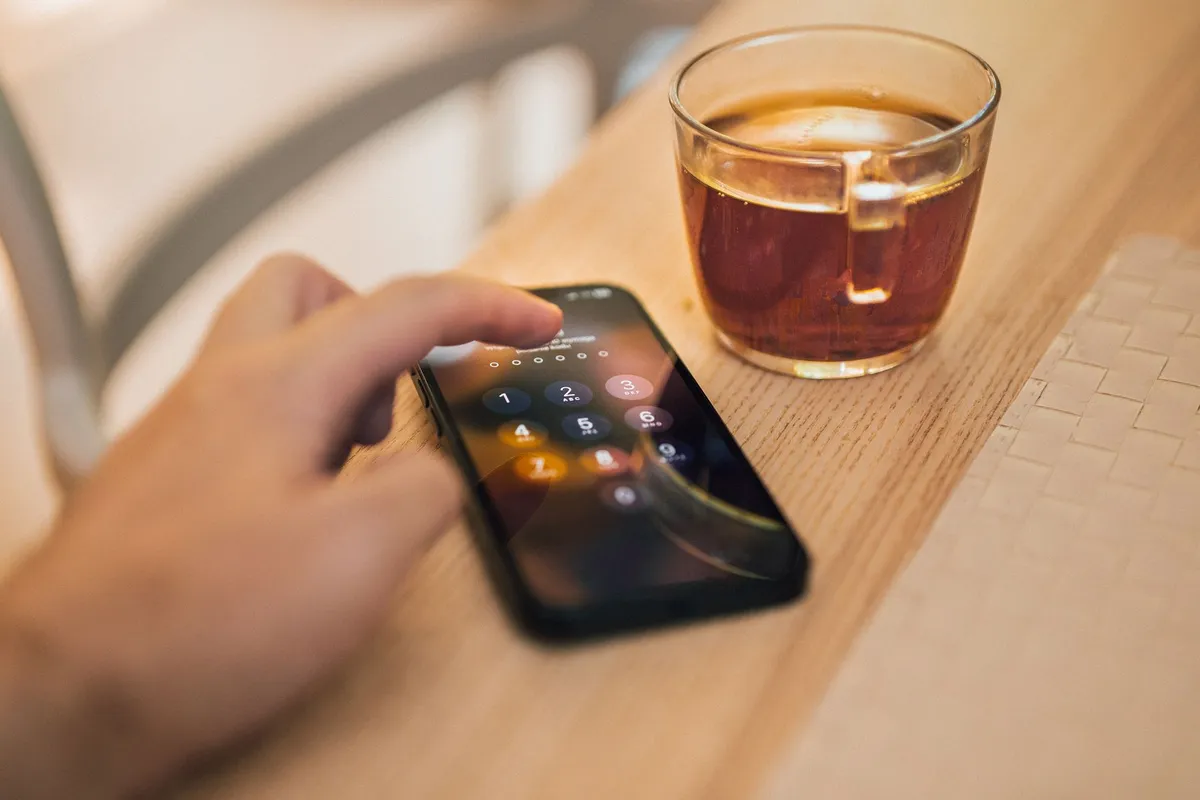
Both major platforms let responders see medical details and contacts without unlocking the device: on an iPhone it is the Medical ID in the Health app with “Show When Locked” enabled, on Android the emergency information section in Settings. Both are reached from the Emergency button on the passcode screen. Fill in conditions, allergies, medications, and two contacts. On a phone that cannot be called back, this is the only way it speaks for you.
4. Label the outside of the phone
Tape a card to the back with the household address and a reachable name and number. The FCC requires this kind of labeling on carrier-donated 911 phones for a reason: whoever picks it up can read the address aloud.
5. Show people the Emergency button, and pick a home for the phone
Every modern phone can place an emergency call from a locked screen, but if the person who needs it does not know that, the lock screen is a wall. Remove the passcode on a device holding no personal data, or show each adult in the house where the Emergency button sits. Then keep the phone where the risk is — the bedroom of the person who falls, the workshop, the front hall. One agreed-upon location beats four vague ones.
The other two numbers worth knowing: 988 and 211
Not every crisis is a 911 crisis, and calling 911 for a situation that needed something else can make things worse.
988 is the national Suicide and Crisis Lifeline. The FCC designated the code in 47 CFR § 52.200, which requires covered providers to transmit all 988 calls to the crisis hotline system maintained by the Assistant Secretary for Mental Health and Substance Use and the Secretary of Veterans Affairs. It supports text too, and under § 52.202 carriers must supply georouting data so a call reaches a crisis center near where the caller actually is rather than where their area code was issued. SAMHSA publishes the 988 details.
211 connects to community information and referral services — rent and utility assistance, food pantries, shelter, help applying for benefits. The FCC assigned it nationally for that purpose in 2000 and publishes a consumer guide on dialing 211. For a household choosing between the electric bill and groceries, 211 is often the right first call.
Here is the part people get wrong: neither 988 nor 211 is covered by the no-service exception. Those are routed as ordinary calls through a carrier that expects an account behind them. A deactivated handset that can still dial 911 generally cannot reach 988 or 211. Only 911 gets the special treatment.
Wi-Fi calling is not the workaround
A Wi-Fi connection does not substitute for cellular on a phone with no plan. Wi-Fi calling is a carrier feature layered on an active account — the call still runs through your provider, which is why you switch it on in carrier settings, not router settings. No account, no Wi-Fi calling.
On your active line it is valuable, especially with weak home coverage. Because the network cannot see where a Wi-Fi call physically originates, your provider asks for a registered emergency address, and that is what 911 receives — so update it if you move. Our guides on whether Wi-Fi calling should be on or off and turning on Wi-Fi calling on Android cover the settings. Ordinary internet calling apps are a separate matter: most are not built to pass your location to a 911 center, and some do not reach 911 at all.
A backup is not a substitute for a real line
Everything above describes a device that does exactly one thing: shout for help. It cannot call a nurse line at 2 a.m., confirm a Medicaid appointment, receive the code your benefits portal texts you, or let a case worker reach you about a SNAP recertification. Missing a callback is one of the most common reasons benefits lapse.
That is the gap the federal Lifeline program exists to close. Lifeline provides a discount of up to $9.25 per month on qualifying phone or internet service, and up to $34.25 per month for households on federally recognized Tribal lands. It is one benefit per household, paid to a participating provider rather than to you. USAC administers it for the FCC and publishes the rules at lifelinesupport.org and on the USAC Lifeline pages.
The two common paths are household income at or below 135% of the Federal Poverty Guidelines, or participation by someone in the household in Medicaid, SNAP, Supplemental Security Income, Federal Public Housing Assistance, or the Veterans Pension and Survivors Benefit. On Tribal lands, Bureau of Indian Affairs General Assistance, Tribally-Administered TANF, Tribal Head Start, and the Food Distribution Program on Indian Reservations also qualify. USAC lists a separate path for survivors of domestic violence, human trafficking, and related crimes, so check the qualification page rather than assuming you are out.
The sensible setup is both: one Lifeline-supported line that works, plus the old handset kept charged for when that phone is lost, broken, or in another room.
Frequently asked questions
Can a phone with no SIM card call 911?
Will 911 be able to call me back on a phone with no service?
Does text-to-911 work without a plan?
Can I dial 988 or 211 from a phone with no service?
Should I test the phone by calling 911?
Does Lifeline cover both a phone and the service?
Where to go from here
Keep the old phone. Charge it, label it, fill in the emergency information on its lock screen, and tell everyone in the house where it lives. It costs nothing and it dials 911.
Then fix the real gap. One working line stops being a luxury the moment your benefits, prescriptions, and appointments depend on someone reaching you.
Check your Lifeline eligibility here — it takes a couple of minutes and asks about programs you may already be in. For the underlying rules, see who qualifies for the Lifeline program and free phones for low-income seniors. If your spare phone still carries an eSIM profile from an old plan, read should I delete the eSIM from my old phone first.
Lifeline Access is an independent consumer resource. We are not a government agency and not a phone carrier. Rules and dollar amounts here come from the FCC and USAC; verify current details at lifelinesupport.org before you apply.