
Table of Contents
- The Army and Air Force advertise more than 200 career fields, while the Navy lists more than 150 roles.
- Navy ship deployments commonly last 6–9 months and may follow monthly underway periods during workups.
- Marine Corps recruit training lasts 13 weeks and ends with the 54-hour Crucible.
- Basic training ranges from about 7.5 weeks in the Air Force and Space Force to 13 weeks in the Marine Corps.
- Single Army and Marine Corps members generally remain in barracks through E-5 under February 2026 housing guidance.
Choose the job and daily life—not the recruiting slogan
Your branch sets the institutional culture. Your job, unit, platform, and duty station determine most of your actual week.
An Army laboratory specialist and an Army infantry soldier wear the same uniform but live radically different lives. The same divide exists between an Air Force cyber specialist and maintainer, or between a Navy hospital corpsman and submariner. Branch comparisons only help if you also compare the exact specialties available to you.
Start with five questions:
- What exact job will your contract guarantee?
- How much field time, sea time, shift work, or temporary duty comes with it?
- Does the training produce a civilian credential employers recognize?
- Where can that specialty be stationed?
- How competitive is advancement in that specialty—not merely the branch?
Basic pay is tied to pay grade and years of service, not branch. An Army E-3 and Coast Guard E-3 with equal service receive the same basic pay. Use the 2026 enlisted military pay chart to compare compensation instead of assuming one branch pays better.
Here is the shortest defensible answer: Choose the Army for maximum variety, the Marines for combat-centered identity, the Navy for maritime and shipboard careers, the Air Force for technical breadth and base-centered work, the Space Force for specialized space or cyber work, and the Coast Guard for maritime law enforcement and rescue.
The details can change that answer.
How each branch mission changes your daily life
The six services operate in different environments. Those environments affect uniforms, terminology, schedules, duty locations, and how often you sleep somewhere other than home. Review the Department of Defense descriptions of the armed forces for their formal missions and departmental relationships.
| Branch | Primary operating focus | Culture you should expect |
|---|---|---|
| Army | Sustained land operations | Large, decentralized organization with sharp differences between combat, support, medical, aviation, and headquarters units |
| Marine Corps | Expeditionary air-ground combat | Strict standards, physical fitness, shared hardship, small-unit identity, and combat readiness across every MOS |
| Navy | Operations on, under, and above the sea | Ratings, ships, submarines, aviation squadrons, watchstanding, and recurring sea-shore cycles |
| Air Force | Airpower, cyber, intelligence, and global support | Technical specialization, formal processes, base operations, and wide differences between operational and support AFSCs |
| Space Force | Space operations and support to joint forces | Small, selective, technical organization centered on space, cyber, intelligence, engineering, and command and control |
| Coast Guard | Maritime security, rescue, law enforcement, and safety | Small crews, early responsibility, emergency response, maritime competence, and direct public-facing missions |
The Marine Corps is the clearest identity-first choice. You become a Marine first and perform your MOS second. That appeal is real. It also means stricter fitness, appearance, and combat-readiness expectations, including for Marines assigned to administration or communications.
The Army gives you the broadest organizational range. One installation can contain infantry, helicopters, hospitals, intelligence units, mechanics, and logistics operations. That range creates options, but “Army life” is too broad to predict without knowing the unit and MOS.
The Navy and Coast Guard both operate at sea, but their daily missions differ. Navy service centers on military maritime power and forward presence. Coast Guard members perform rescue, law enforcement, port security, inspections, and environmental response alongside military duties.
The Air Force and Space Force concentrate heavily on technical operations. That does not guarantee an office schedule. Maintenance, security forces, aircrew, missile operations, cyber defense, and 24-hour command centers can require nights, weekends, alerts, and rotating shifts.
Count workups, patrols, and field exercises as time away
A recruiter may describe a six-month deployment without counting the training events that precede it. Your family experiences every night away, regardless of what the orders call it.
Use the service-specific deployment overview to examine predeployment, deployment, and reintegration. No single branch-wide average can predict your schedule.
- Army: There is no reliable branch-wide deployment length. Combat training center rotations, field exercises, predeployment preparation, and individual assignments can add months away from home.
- Marine Corps: A common model involves roughly one year of preparation followed by a 6–7-month deployment. Some deployments last one year or longer.
- Navy: Ship deployments commonly run 6–9 months. During workups, a ship may spend 10 days to two weeks underway each month before the deployment starts. Sea duty is the most predictable source of extended absence among the branches.
- Air Force: Patterns can include deployments of 6–12 months or repeated two-to-three-month trips. Aircrew and mobility personnel may accumulate frequent shorter absences.
- Space Force: No defensible service-wide deployment duration is available. Guardians often work from fixed installations, but overseas assignments, temporary duty, joint support, and deployments still happen.
- Coast Guard: Cutter class, aviation assignment, station, and specialized unit determine time away. Cutter patrols and emergency response can create repeated absences even when you remain closer to the United States.
If predictable time at home is your top priority, investigate the exact unit types associated with your proposed job. “Air Force” is not enough. Neither is “shore duty.” Ask how many days people in that shop spent deployed, underway, in the field, or on temporary duty during the previous 12 months.
Your specialty matters more than the branch name
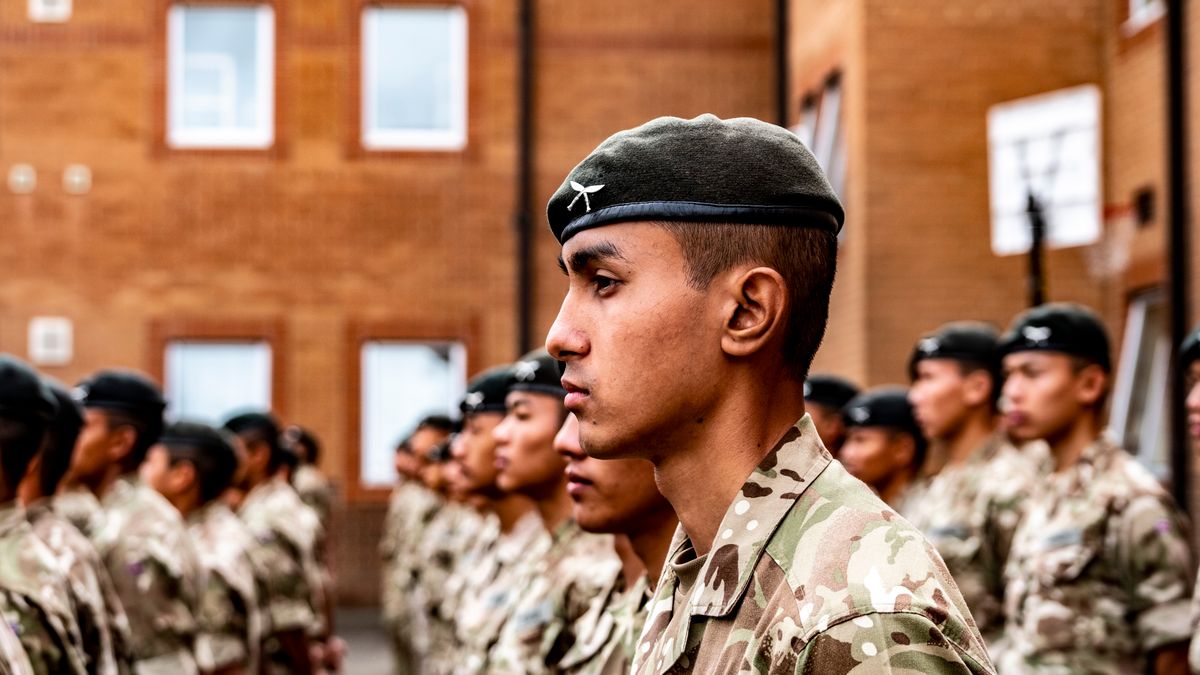
The Army and Air Force advertise more than 200 career fields, while the Navy lists more than 150 roles. The Marine Corps, Space Force, and Coast Guard offer smaller inventories built around their narrower missions.
Use the MOS Matcher to compare Army, Marine Corps, Air Force, and Navy jobs by interests and line-score requirements. Then investigate the exact specialty. Do not accept a broad occupational category unless you are willing to perform every job within it.
| Branch | Job-selection advantage | Strong civilian-adjacent areas | Main catch |
|---|---|---|---|
| Army | Widest mix of ground, medical, aviation, intelligence, and support work | Health care, IT, logistics, aviation maintenance, engineering, skilled trades | Combat-arms jobs often need additional credentials for direct civilian transfer |
| Marine Corps | Strong aviation, communications, intelligence, logistics, and maintenance communities | Aviation maintenance, cyber, communications, firefighting, vehicle maintenance | You may secure a job category rather than one exact MOS |
| Navy | Extensive maritime and advanced technical ratings | Nuclear power, electronics, medicine, cyber, aviation maintenance, construction | Ship-specific experience may require civilian licensing or careful translation |
| Air Force | More than 200 active-duty fields with heavy technical representation | Cyber, intelligence, aircraft maintenance, health care, engineering, logistics | Your aptitude and Air Force needs can limit control unless the job is secured in writing |
| Space Force | Concentrated access to space-related technical work | Satellite operations, aerospace, cyber, intelligence, engineering | Fewer jobs and locations; positions can demand high aptitude and clearance eligibility |
| Coast Guard | Direct operational work in maritime safety and enforcement | Law enforcement, emergency management, inspections, aviation, mechanics | Small rating inventory and limited openings can restrict choice |
A military job is not automatically a civilian qualification. Aircraft experience may still require Federal Aviation Administration credentials. Medical work may require state licensing. Cyber experience is stronger when paired with recognized certifications. Truck-driving experience may require a commercial driver’s license.
Ask the recruiter which certification the training produces, who pays for it, and whether it remains valid after separation. Use the military career guide to review job assignment, specialty changes, and the difference between a guaranteed career field and a guaranteed job.
Do not rely on a verbal promise. The exact job, bonus, school option, or other guarantee must appear in your enlistment documents. If it is absent, assume you are not receiving it.
Quality of life comes down to housing, privacy, and schedule control
No standardized government ranking proves that one branch has the “best quality of life.” Structural conditions still give you useful points of comparison.
For single junior enlisted members, Military OneSource’s February 2026 housing guide generally keeps Army and Marine Corps personnel in barracks through E-5. Navy and Coast Guard members generally use unaccompanied housing through E-4. Air Force members generally remain in dormitories through E-4 while they have fewer than three years of service. Space Force applicants should confirm the dormitory policy at their prospective installation.
The Air Force rule is less restrictive on paper, but policy does not tell you whether your room is renovated, whether you have a roommate, or whether aircraft operations keep you on night shift. Review the Air Force active-duty overview before comparing individual AFSCs.
Navy sea duty is its own category. Shared berthing, watch rotations, restricted connectivity, limited privacy, and workups affect your life before a formal deployment begins. Army and Marine combat units can spend extended periods in the field. Coast Guard members at small units may carry frequent watches because fewer people are available to cover them.
Ask one concrete question: “What does a normal month look like for an unmarried E-3 in this job at an operational unit?”
Then request specifics. Find out how often that E-3 works overnight, shares a room, stands duty on weekends, leaves for field exercises, or spends time underway.
No branch can promise the fastest promotion
Junior promotions are commonly driven by time, satisfactory performance, required qualifications, and command approval. Competition becomes more serious after E-4 because vacancies, specialty manning, evaluations, tests, records, and boards begin to dominate.
- Army: Applicable promotions use a points-based system. Education, fitness, qualifications, evaluations, performance points, and available positions matter.
- Marine Corps: Published minimum thresholds include six months for E-1 to E-2, nine months for E-2 to E-3, 12 months for E-3 to E-4, and 24 months for E-4 to E-5. These are eligibility thresholds, not promised promotion dates.
- Navy: Junior advancement is generally based on time and satisfactory performance. E-5 and E-6 advancement becomes competitive through exams, records, and rating vacancies.
- Air Force: Eligibility can begin after six months in grade for E-2, 10 months in grade for E-3, and roughly 18–24 months in grade for E-4. E-5 and above are competitive.
- Space Force: Enlisted advancement uses a board-based process. Its small specialty populations can create opportunities or bottlenecks, so no branch-wide speed claim is defensible.
- Coast Guard: E-1 through E-3 advancement depends on qualifications, service time, and approval. E-4 through E-9 promotions compete for limited vacancies.
Two people in different specialties can have radically different advancement odds while wearing the same uniform. Never select a branch because someone says promotions are fast. Ask for the current advancement rules and recent selection results for the exact specialty.
Basic training lasts about 7.5 to 13 weeks
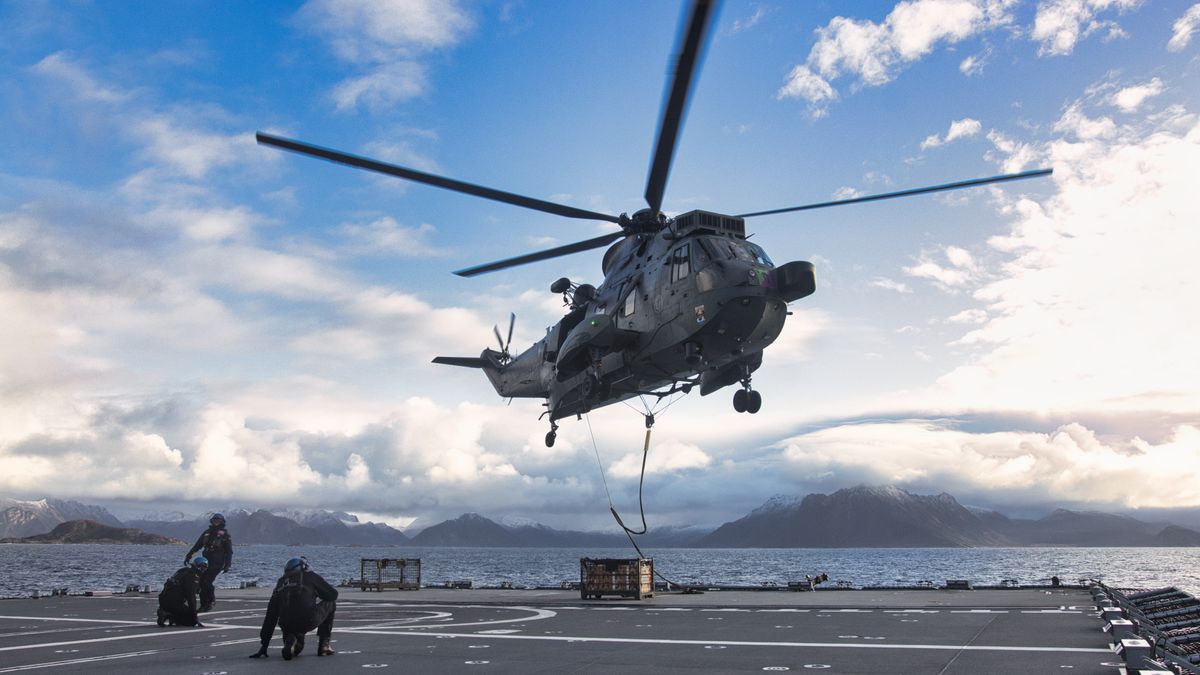
Boot camp occupies a small part of a multi-year contract. Follow-on technical training can add weeks, months, or more than a year. Use the branch-by-branch basic training guide to review training locations, phases, and culminating events.
| Branch | Current working length | Distinguishing emphasis |
|---|---|---|
| Air Force | About 7.5 weeks | Discipline, fitness, weapons, airmanship, and expeditionary skills |
| Space Force | About 7.5 weeks within the Air Force framework | Guardian-specific space instruction added to basic military training |
| Coast Guard | 8 weeks | Swimming, seamanship, maritime law, firefighting, and emergency response |
| Navy | 9 weeks | Swimming, seamanship, firefighting, watchstanding, and Battle Stations |
| Army | 10 weeks | Marksmanship, weapons, tactical movement, field exercises, and conditioning |
| Marine Corps | 13 weeks | Combat identity, marksmanship, endurance, discipline, and the 54-hour Crucible |
There is no neutral government-wide difficulty score. Marine recruit training is the longest and most explicitly combat-centered. Army training contains an extended field and tactical component. Navy and Coast Guard training impose maritime and swimming demands. Air Force and Space Force training is shorter, but technical or special-warfare pipelines can continue for months.
Do not choose a branch because its basic training is two weeks shorter. If eight or 13 weeks changes your decision about several years of service, you are comparing the wrong factor.
Follow this order before you sign an enlistment contract
- Choose three acceptable jobs. Compare duties, training length, credentials, clearance requirements, duty stations, and operational schedules.
- Eliminate incompatible environments. Rule out sea duty if confined shipboard living is unacceptable. Rule out combat-centered culture if you do not want field time and strict physical expectations.
- Compare written job guarantees. A guaranteed category is not necessarily a guaranteed MOS, rating, or AFSC.
- Interview people doing the job now. Ask about the previous 12 months: shifts, deployments, field days, underway periods, and temporary duty.
- Check advancement within the specialty. Branch-wide claims hide shortages and bottlenecks.
- Read every contract page. Bonuses, schools, job guarantees, and options must be written into the enlistment documents.
Choose the Marines only if being a Marine matters enough to accept the culture and reduced job flexibility. Choose the Navy only if you can accept sea duty. Choose the Space Force only if its narrow technical mission matches your interests. For the other branches, compare exact jobs first.
Take your three acceptable specialties to recruiters from at least two branches. Ask each recruiter to show you what can be guaranteed in writing before you schedule processing or commit to an enlistment date.
Questions people actually ask
Which military branch has the best quality of life?
No official ranking establishes a winner. The Air Force has the least restrictive verified junior-housing rule: single E-4 members may leave dormitories after three years of service, subject to local conditions. Your actual quality of life depends on the AFSC, unit, shift, installation, room, and deployment schedule. Navy shipboard life and Army or Marine field time can create less privacy and more nights away.
Which military branch deploys the least?
No branch can promise the fewest deployments. Navy ship assignments have the clearest recurring pattern, with deployments commonly lasting 6–9 months plus underway workups. Air Force schedules range from repeated short trips to deployments lasting 6–12 months. Space Force and Coast Guard assignments also vary by mission and unit. Compare the exact job and unit types instead of relying on a branch label.
Which branch has the most job options?
The Army and Air Force each advertise more than 200 career fields, while the Navy lists more than 150 roles. The Army offers the widest mix of combat, medical, aviation, logistics, intelligence, engineering, and support work. A large catalog does not guarantee your preferred opening. Require the exact MOS, rating, or AFSC in your enlistment documents when that option is available.
Which military branch has the easiest basic training?
There is no official cross-service difficulty ranking. Air Force and Space Force basic training lasts about 7.5 weeks, compared with 8 weeks for the Coast Guard, 9 for the Navy, 10 for the Army, and 13 for the Marine Corps. Shorter does not mean effortless. Swimming, academics, field exercises, fitness standards, or a lengthy follow-on school may be the harder part for you.
Which military branch promotes enlisted members fastest?
There is no reliable branch-wide winner. Early promotions usually depend on service time, performance, qualifications, and command approval. After E-4, specialty manning, vacancies, evaluations, exams, and boards have greater influence. Advancement can be open in one specialty and stalled in another within the same service. Ask for current selection information covering the exact MOS, rating, or AFSC you are considering.
Can a recruiter guarantee my military job?
Some enlistment contracts can guarantee an exact job, while others guarantee only a career field or category. Those are not the same arrangement. Availability also depends on your test scores, medical qualifications, clearance eligibility, and service needs. If an exact job, bonus, school, or option does not appear in your enlistment documents, treat it as unavailable regardless of what someone told you verbally.