
Table of Contents
Yes, two people living at the same address can each receive Lifeline — but only if they are two separate households. The limit is one benefit per household, and the FCC does not define a household by walls, doors, or mailing addresses. It defines it by money.
That distinction stalls thousands of applications. Someone applies, the system sees an existing subscriber at their address, and the application freezes pending a form most people have never heard of. That form is not a rejection. It is the mechanism the FCC built so roommates, boarders, independent adult children, and residents of group housing are not locked out by a shared address.
The rule, stated precisely
The Lifeline Program Application Form — FCC Form 5629, administered by the Universal Service Administrative Company (USAC) — puts it plainly: “You are only allowed to get one Lifeline benefit per household, not per person.” The rule behind that sentence, 47 CFR 54.409(c), says a consumer qualifies only if they are not already receiving Lifeline and “there must not be anyone else in the subscriber’s household subscribed to a Lifeline service.”
Note what the rule does not say. Not one per address. Not one per family, one per building, or one per phone number. One per household — and household is a defined term with a specific test attached.
The benefit is singular in a second way. Per the USAC application form, Lifeline covers one mobile line or one home line for phone, or your mobile connection or your home connection for internet — not both. Your household also cannot receive Lifeline from two companies at once.

How the FCC defines a household
The controlling definition sits in 47 CFR 54.400(h). A household is “any individual or group of individuals who are living together at the same address as one economic unit.” It may include related and unrelated people. An economic unit “consists of all adult individuals contributing to and sharing in the income and expenses of a household.”
Three riders in that paragraph decide most real cases:
- An adult is anyone 18 or older. The rule stops there; the Household Worksheet extends the same treatment to emancipated minors.
- Children under 18 living with a parent or guardian are always in that parent’s household. There is no version of the rule where a 15-year-old is separate.
- If an adult has no or minimal income and lives with someone who financially supports them, both people are one household. This clause catches most adult-child-at-home situations, lease or no lease.
USAC’s plain-language version, printed on both the application and the worksheet, is shorter: “A household is a group of people who live together and share income and expenses (even if they are not related to each other).”
What “expenses” means
The Household Worksheet spells this out: household expenses “include, but are not limited to, food, healthcare expenses, and the cost of renting or paying a mortgage on your place of residence and utilities.”
Sharing one of those does not automatically merge two households. Roommates who each pay half the electric bill but buy their own food, carry their own coverage, and hold separate incomes are not one economic unit. The test is whether you function as a shared pot of money — not whether a single bill carries both names.
What “income” means
47 CFR 54.400(f) defines income as gross income under section 61 of the Internal Revenue Code for all household members. The worksheet gives the consumer-facing list: “salary, public assistance benefits, social security payments, pensions, unemployment compensation, veteran’s benefits, inheritances, alimony, child support payments, worker’s compensation benefits, gifts, and lottery winnings.”
Public benefits count. So do gifts. If one adult has no earnings but is handed money for rent and groceries every month by another adult in the home, that is shared income — the “no or minimal income” clause doing its work.
Living situation by living situation
Roommates. The worksheet’s own example: “4 roommates who live together but do not share money are 4 households. They can have one Lifeline benefit each, 4 total.” Splitting rent is not sharing income. The gray area is a common grocery fund, a joint account, or one person carrying another for months.
An adult child at home. A 24-year-old who works, contributes toward rent, and covers her own food can be her own household. A 24-year-old with no income whose parents pay for everything is part of theirs. The line is financial support, not age and not the lease.
Married couples. One household. The worksheet states that “a married couple who live together are one household. They must share one Lifeline benefit,” and the decision tree tells married applicants to answer yes to the shared-money question regardless of how they arrange finances. An unmarried domestic partner gets no such automatic answer — the worksheet lists a domestic partner as simply another adult in the home, so the ordinary shared-income-and-expenses test decides it.

A live-in caregiver. It turns on who pays whom. A paid caregiver who earns wages and buys her own food is a separate household from the person she cares for. A relative who moved in to provide care and is now supported by that home is part of it.
Subdivided houses, duplexes, and rooming houses. Four families in a subdivided house with one street number are four households. The problem is rarely the rule — it is the address record. If the database sees the same street number with no unit designation, applications collide. Use your unit designation every time (apartment, unit, floor, room, rear, upper), formatted identically on your application, your ID, and your benefit paperwork. That habit prevents more duplicate-address flags than anything else you can do.
Assisted living, group homes, and shelters. The worksheet’s second example is unambiguous: “30 seniors who live in an assisted-living home but do not share money are 30 households. They can have one Lifeline benefit each, 30 total.” The same logic covers group homes, boarding houses, transitional housing, and shelters. The application also asks whether your home address is temporary — the field built for shelters and transitional stays. Answer it honestly rather than borrowing a friend’s address.
Living situations mapped to likely outcomes
| Living situation | Likely result | What supports it |
|---|---|---|
| Married couple, same home | One household | Nothing to file; one benefit only |
| Parent and child under 18 | One household | Minors are always in the parent’s household |
| Adult child with own job, pays own way | Two households | Own pay stubs, own SNAP or Medicaid case, own food costs |
| Adult child with no income, supported by parents | One household | The 54.400(h) support clause applies |
| Roommates splitting rent, separate finances | Two or more households | Separate leases or room agreements, separate grocery costs |
| Roommates with joint account and shared food budget | One household | Shared income and expenses = one economic unit |
| Paid live-in caregiver | Two households | Wage records, caregiver buys own food |
| Relative who moved in and is supported | One household | Financial support flows one way |
| Tenants in a subdivided house or duplex | Separate households | Unit number on lease, mail, and ID |
| Assisted living or group home residents | Separate households | Each resident manages own money |
| Shelter or transitional housing residents | Separate households | Mark the address as temporary on the application |
The FCC does not require proof of separate-household status — the worksheet is a signed certification, not a document request. The right-hand column is what you would reach for if a provider, a state administrator, or the National Verifier follows up on your address.
The Household Worksheet: FCC Form 5631
When you will be asked for it
47 CFR 54.410(g) sets the trigger: if an applicant shares an address with one or more existing Lifeline subscribers according to the National Lifeline Accountability Database or the National Verifier, that applicant must certify compliance with the one-per-household rule at enrollment. Carriers do this using the Household Worksheet published by the FCC’s Wireline Competition Bureau; states that mandate their own enrollment forms may substitute those.
The same rule adds a trigger most people miss: at recertification, if your household changed in a way that makes your earlier certification inaccurate, you must complete a new worksheet.
Being asked for the worksheet is not an accusation. It is the routine consequence of an address match.
The three questions on the form
Page 3 is a short decision tree. The form’s Paperwork Reduction Act notice puts the average burden at 0.25 hours — about a quarter of an hour, start to finish.
| Question | Wording on the form | Where it leads |
|---|---|---|
| 1 | Do you live with another adult? (18 or older, or an emancipated minor) | No → you can apply. Yes → question 2 |
| 2 | Do they get Lifeline? | No → you can apply. Yes → question 3 |
| 3 | Do you share money — income and expenses — with them? | No → you can apply as a second household. Yes → you do not qualify |
Question 3 is the whole rule in one line, and the form adds: “If you are married, you should check yes for this question.” Answering no to question 3 means you “live at an address with more than one household” and your household does not yet get Lifeline — a qualifying answer, not a disqualifying one.
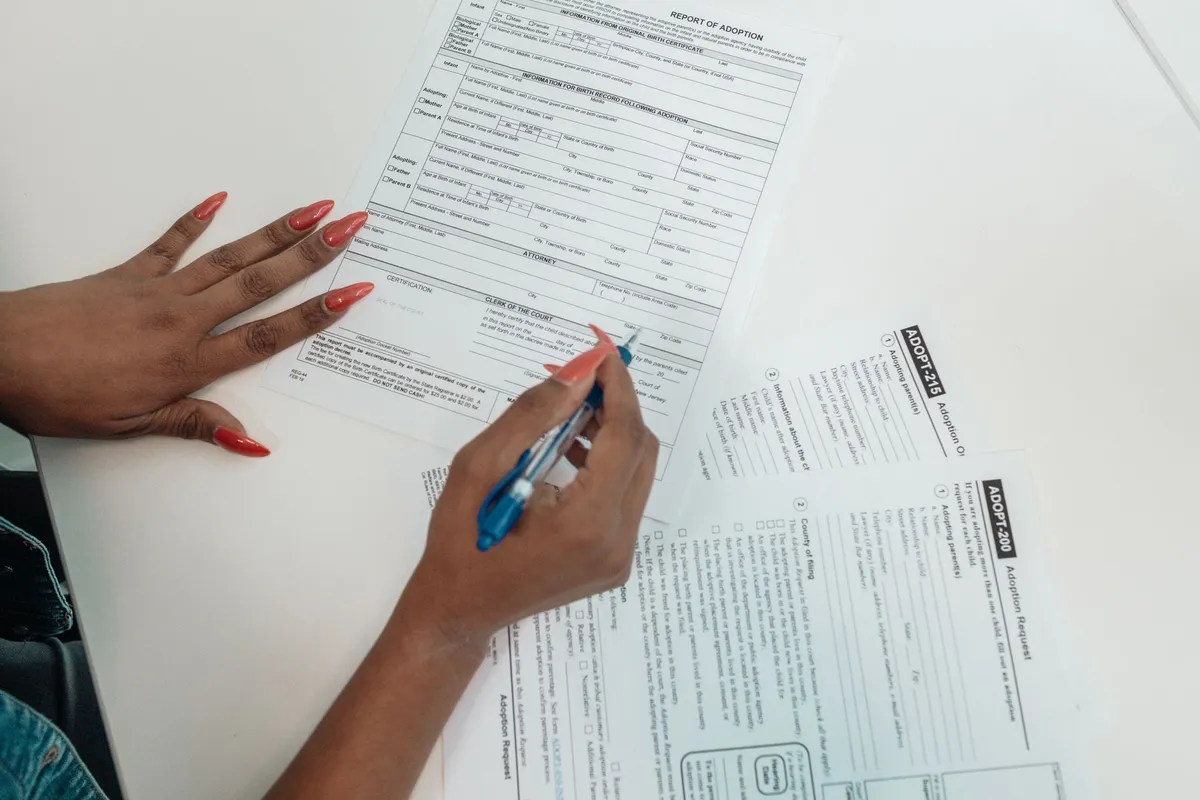
What to initial, and how to fill it out
Page 4 carries two agreement lines:
- Line A — “I live at an address with more than one household.” Initial this only if you reached question 3 and answered no.
- Line B — “I understand that the one-per-household limit is a Federal Communications Commission (FCC) rule and I will lose my Lifeline benefit if I break this rule.” Everyone who submits the worksheet initials this.
Sign and date it, then submit it with your Lifeline Program Application Form. Per the form’s instructions: use your full legal name as it appears on your Social Security card or state ID, print in capital letters in black ink, and enter the address where you will receive service — no P.O. boxes. Fill in the apartment or unit field, and make the address match your application exactly.
The certification, and what it carries
FCC Form 5629 requires accurate and true information on the application “and on all Lifeline-related forms or questionnaires.” Its agreement block, signed under penalty of perjury, includes the line: “I know that willingly giving false or fraudulent information to get Lifeline Program benefits is punishable by law and can result in fines, jail time, de-enrollment, or being barred from the program.”
Read that as a reason to be careful, not a reason to be afraid. Someone who genuinely keeps separate finances from a roommate and says so is answering correctly. The exposure attaches to knowingly false statements.
If two people in one household are both enrolled
The regulation calls this “duplicative support” — defined at 47 CFR 54.400(g) as one subscriber receiving two or more Lifeline services concurrently, or two or more subscribers in a household receiving Lifeline concurrently.
The certification requirements at 47 CFR 54.410(d) require enrollment forms to state plainly that violating the one-per-household limitation “constitutes a violation of the Commission’s rules and will result in the subscriber’s de-enrollment from the program.” You also certify to notify your carrier within 30 days if anyone in your household starts receiving a second benefit.
If you discover your household is doubled up — a family member enrolled without telling you, say — have one benefit cancelled and tell the provider. Resolving it voluntarily is a very different posture from being caught in an audit.

Household size cuts both ways
The same word does double duty. It caps you at one benefit per household — and, if you qualify on income rather than through a program, it sets your income limit. The test is 135% of the Federal Poverty Guidelines for your household size. These figures are printed on the February 2026 approval edition of the Lifeline Program Application Form, which labels them “135% of the 2026 Federal Poverty Guidelines”:
| People in household | 48 states, DC, territories | Alaska | Hawaii |
|---|---|---|---|
| 1 | $21,546 | $26,933 | $24,786 |
| 2 | $29,214 | $36,518 | $33,602 |
| 3 | $36,882 | $46,103 | $42,417 |
| 4 | $44,550 | $55,688 | $51,233 |
| 5 | $52,218 | $65,273 | $60,048 |
Declaring yourself a separate one-person household cuts both ways: it opens the door to a second benefit at the address, and it drops your income ceiling to the one-person line. Both statements must be true at once, so count the same people the same way on both parts of the form. Our overview of who qualifies for the Lifeline program covers both routes.
Frequently asked questions
Can two people at the same address each get Lifeline?
Can a husband and wife each get a Lifeline benefit?
I live with my parents. Am I a separate household?
Why was I asked to fill out a Household Worksheet?
Do I have to prove I am a separate household?
Do residents of assisted living or a group home each get Lifeline?
What happens if two people in my household are both on Lifeline?
Does the worksheet come up again at recertification?
Where to go from here
If you share an address with an existing Lifeline subscriber, do not assume you are shut out. Work through the three questions honestly. If you keep your own income and pay your own expenses, you are your own household, and the worksheet exists so you can say so on the record.
First confirm which eligibility path fits you — a qualifying program such as SNAP, Medicaid, SSI, Federal Public Housing Assistance, or Veterans and Survivors Pension, or the income test above. Check your eligibility here, then follow our guide on how to apply for the Lifeline program. Once enrolled, complete Lifeline recertification each year and report household changes within 30 days.
Sources: 47 CFR 54.400, 54.409 and 54.410 (eCFR); FCC Form 5631 Lifeline Program Household Worksheet and FCC Form 5629 Lifeline Program Application Form, February 2026 approval edition, administered by the Universal Service Administrative Company; the 2026 HHS Federal Poverty Guidelines; and lifelinesupport.org. Lifelineaccess.com is an independent consumer resource, not a government agency and not a phone company.