Table of Contents
If you already get SNAP, SSI or TANF, there is a good chance a second program will help pay your power bill. LIHEAP — the Low Income Home Energy Assistance Program — is federal money that goes to your gas, electric or fuel company on your behalf so your home stays heated in winter and cooled in summer.
Three things surprise people. The benefit almost never lands in your bank account; it lands on your utility account as a credit. There is a separate, faster track for households facing a shutoff. And the application window opens and closes on a calendar your state sets, with a fixed pot of money.
In fiscal year 2024, LIHEAP served about 5.9 million households on $4.1 billion in released funding, per the ACF LIHEAP fact sheet — still a fraction of everyone eligible. The federal Office of Community Services estimates in its consumer FAQ that on average only about 20 percent of qualified households receive a benefit in a year. The limiting factor is not eligibility. It is that funding runs out and people apply late.

What LIHEAP actually pays for
LIHEAP is a block grant. Congress funds it, HHS allocates it, and all 50 states, the District of Columbia, five territories and roughly 150 tribes and tribal organizations run their own programs with their own rules. The federal government takes no applications and sends no money to households directly. Each grant recipient can offer up to three kinds of help, and knowing which one you need changes who you call and when.
| Assistance type | What it covers | When to apply | Who to contact |
|---|---|---|---|
| Regular heating or cooling benefit | A seasonal credit toward your main heating or cooling bill — electricity, gas, propane, fuel oil or wood | During your state’s posted heating or cooling season | Your local LIHEAP intake agency, often a community action agency |
| Crisis / emergency assistance | No heat or cooling, a disconnection notice, an empty fuel tank, or service already off; may cover arrears and reconnection fees | Whenever the crisis component is open; federal law reserves funds until at least March 15 | Same local office — but say the word “crisis” |
| Weatherization and equipment repair | Insulation, air sealing, leaky doors and windows, repair or replacement of a furnace or air conditioner | Year-round in most states, usually with a waiting list | Your state’s weatherization provider, which may be a different office |
Two limits are worth knowing first. LIHEAP is not designed to cover a full year of energy costs, or even a full month in many states — the consumer FAQ says outright that it is unlikely to pay your entire bill. And in many states help applies only to your primary heating source: if you heat with gas, the benefit may go to the gas bill and not the electric one. LIHEAP generally cannot pay water and sewer bills; the one exception in federal guidance is water used for cooling, such as in an evaporative cooler.
Who qualifies, and the shortcut most people miss
The income ceiling your state sets
There is no single national income limit. The statute sets a range and each state picks a number inside it. Under Section 2605(b)(2)(B), a household’s income cannot exceed the greater of 150 percent of the federal poverty guidelines or 60 percent of state median income — and a state may not set its limit below 110 percent of the poverty guidelines. Both the LIHEAP fact sheet and the Clearinghouse eligibility page confirm this.
So the same income can qualify in one state and miss in the next; states using 60 percent of state median income generally reach higher-income households than states that stop at 150 percent of poverty. Some states also add an asset test, which the statute neither requires nor forbids.
Categorical eligibility through SNAP, SSI, TANF and veterans’ benefits
Here is the shortcut. Under Section 2605(b)(2)(A), a state may treat a household as automatically — “categorically” — income eligible if a member already receives TANF, SNAP, SSI, or certain means-tested veterans’ programs. Your income has already been verified once; LIHEAP need not do it again.
According to the Clearinghouse’s categorical eligibility table, 20 states and three territories used this option in 2026. Several add state-funded programs for the blind or disabled, refugee assistance and similar benefits to the federal list.
Three cautions. It is optional, and states apply it differently — some count a household as eligible if any one member receives a qualifying benefit, others require every member to be enrolled. It removes income verification, not the application itself, and does not waive requirements like residency or being responsible for the energy bill. And it does not guarantee a payment; funding still has to be available.
What it does guarantee is fair treatment on benefit size: Section 2605(b)(5) bars states from treating categorically eligible households differently from income-eligible ones.

Renters and subsidized housing
Renters are eligible. The federal FAQ is explicit, and the statute defines a “household” broadly enough to include people who make undesignated payments for energy in the form of rent — heat bundled into what you pay your landlord. Subsidized and public housing is murkier: depending on your state and building, you may be ineligible because the housing subsidy already covers energy. Your local office answers that one.
Why the money goes to your utility instead of to you
This is written into the law. Section 2605(b)(7) lets a state pay home energy suppliers directly on a household’s behalf. When a state does that, it must ensure the supplier bills you in the normal billing cycle for the difference between the actual energy cost and what LIHEAP paid — and that the utility does not treat you adversely because you received assistance. So you apply, you are approved, and weeks later a credit appears on your account, usually against the oldest balance.
There is a real upside to this design. Section 2605(f)(1) says home energy assistance payments are not counted as income or resources for any purpose under federal or state law — explicitly including taxation, SNAP benefits, public assistance and welfare programs. Taking LIHEAP should not reduce your SNAP allotment or your SSI check.
One corollary: HHS warns that LIHEAP makes no direct grants to individuals and never charges a fee, so anyone offering a “LIHEAP grant” for a payment is running a scam. The ACF LIHEAP page directs those reports to the HHS fraud hotline at 1-800-447-8477.
Crisis assistance: the 48-hour and 18-hour rules
Crisis assistance is the part of LIHEAP with actual federal deadlines attached. Section 2604(c) requires each state to reserve a reasonable amount of its funds until March 15 of each program year specifically for energy crisis intervention. That reserved program must:
- provide some form of assistance that will resolve the crisis within 48 hours of an eligible household applying, and
- provide it within 18 hours if the eligible household is in a life-threatening situation.
The statute also requires applications to be accepted at geographically accessible sites, and requires states to give physically infirm applicants a way to apply without leaving home. What counts as a “crisis” is defined state by state, and the definitions sit in the Clearinghouse’s crisis table. Common triggers: a disconnection notice, service already off, a fuel tank near empty, a broken furnace. Life-threatening definitions often turn on medical equipment that needs power, or a household member whose health is endangered by the temperature.
In FY24, 1.3 million households received winter or year-round crisis assistance and another 106,000 received summer crisis assistance.

Does LIHEAP stop a shutoff?
Not by itself, and not everywhere. Shutoff protection comes from your state’s utility regulator, not from LIHEAP. The Clearinghouse’s state-by-state summary of disconnection policies, as of its April 2026 update, counts 42 states with cold-weather protections, 21 with hot-weather protections, two tied to extreme weather events, and 44 with protections for vulnerable populations such as older adults, people with disabilities and households with young children.
Three qualifications matter enormously, and the Clearinghouse spells them out:
- They generally cover regulated utilities only. Municipal utilities, rural electric cooperatives and propane or heating oil dealers usually sit outside a public utility commission’s authority. They may follow the rules voluntarily; they are not required to.
- A moratorium delays disconnection; it does not forgive the bill. Usage keeps being billed and arrears keep accumulating.
- Protection ends. When the moratorium lifts and a balance remains, disconnection becomes possible again.
That is exactly why applying during a protected winter period is smart rather than redundant: the moratorium buys time, LIHEAP reduces what you owe when it lifts. If your utility has already sent a disconnection notice, tell the intake worker immediately — that routes you into the crisis component. Disputes with the utility itself go to your state public utility commission, not to HHS.
Weatherization: two programs with similar names
Fixing the house is cheaper over time than paying the bill every winter. There are two federal routes.
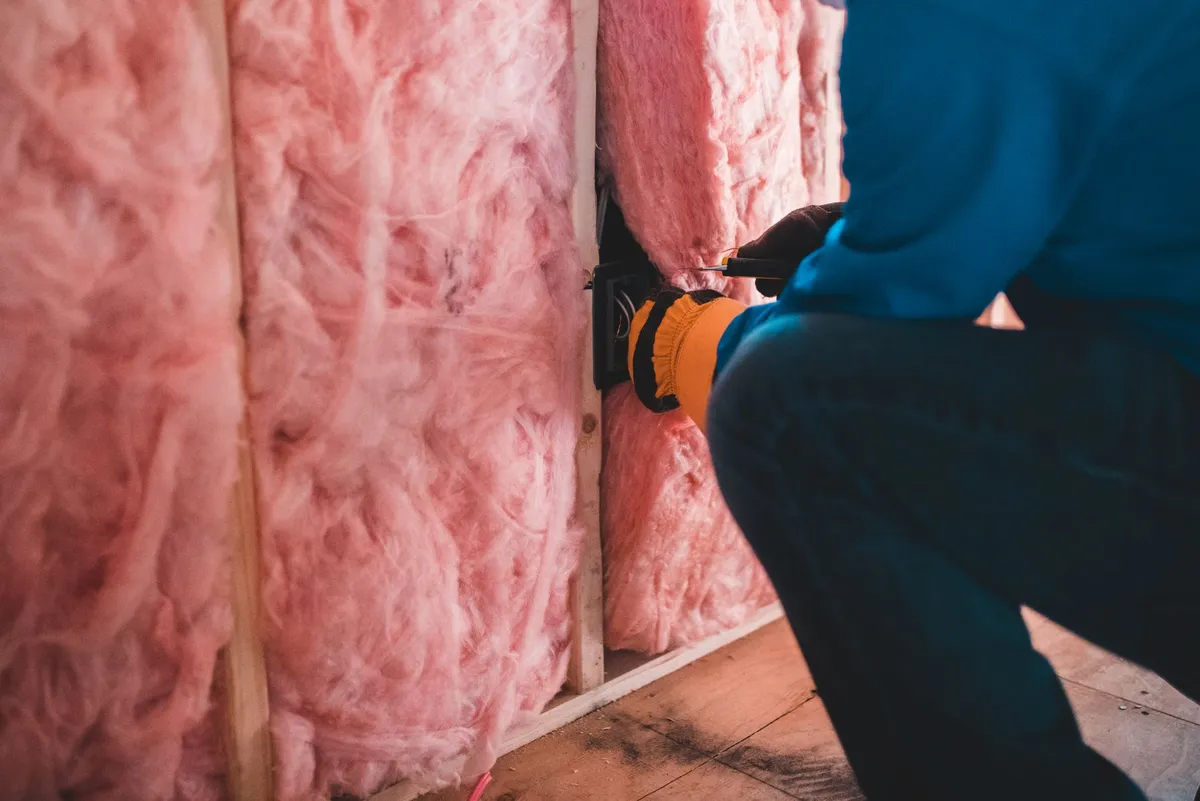
LIHEAP weatherization. States may spend up to 15 percent of their LIHEAP grant — or 25 percent with a federal waiver — on weatherization and low-cost, energy-related home repairs. It is optional, so not every state offers it. About 50,000 households got weatherization through LIHEAP in FY24.
The DOE Weatherization Assistance Program. A separate program run by the U.S. Department of Energy through state and local agencies. Per DOE’s how to apply page, households at or below 200 percent of the poverty income guidelines, or receiving SSI, are eligible, and states may instead elect LIHEAP’s 60 percent of state median income standard. Priority goes to older adults, families including someone with a disability, families with children and high energy users. Renters apply too, with landlord permission. Expect a waiting list and an energy audit before work is scheduled. Typical measures either way: attic and wall insulation, air sealing, weatherstripping, and furnace or air conditioner repair.
When to apply: the calendar is the whole game
There is no national application date. Each grant recipient publishes its own opening and closing dates in its annual model plan, and the Clearinghouse compiles them into a program duration table covering every state and territory.
The spread is wide. Some states run heating assistance October 1 through April 30; some do not open intake until December; Arkansas opens the first Monday after the New Year holiday; Arizona assigns different windows to different counties; California, the District of Columbia and several territories operate year-round. Some states also let local agencies open early for priority households — Arkansas intake agencies, for example, may begin serving older adults, people with disabilities and children under 6 up to 30 days before general intake.
Three rules follow. Find your state’s opening date and apply in the first weeks. Being turned away for lack of funds is not the end — the federal FAQ notes crisis programs sometimes open after the regular program closes, so ask when to check back. And ask about other sources in the same conversation; community action agencies, utility hardship funds and private “fuel funds” often exist alongside LIHEAP.
How to find your state or tribal LIHEAP office
You apply locally, always. Federally recognized tribes and tribal organizations receive LIHEAP awards directly, so if you live on tribal land your application may go to a tribal program rather than the state.
- Use the Clearinghouse’s office search tool, which searches by state, territory or tribe.
- Call the National Energy Assistance Referral hotline, toll free, at 1-866-674-6327.
- USAGov’s help with energy bills page covers the eligibility questions plus the state LIHEAP and weatherization lookups.
Bring what your state asks for: photo ID, Social Security numbers for household members, proof of income for the state’s lookback period, a recent utility bill or fuel delivery statement, and proof of address. If you are categorically eligible, an award letter from SNAP, SSI or TANF may stand in for income documents. If you are denied and believe it was wrong, you have appeal rights, normally described in the denial notice.
How LIHEAP fits with the rest of your benefits
The programs that make you categorically eligible for LIHEAP are largely the same ones that qualify you for Lifeline, the FCC’s phone and internet discount. Per Lifeline’s how to qualify page, SNAP, Medicaid, SSI, Federal Public Housing Assistance, Veterans Pension and Survivors Benefit, or certain Tribal programs qualify a household — as does income at or below 135 percent of the federal poverty guidelines.
So if you are gathering documents for LIHEAP, you already hold most of what a Lifeline application requires; the details are in our guide to Lifeline eligibility. New to food benefits? Start with what SNAP and EBT actually are. For one state’s program in detail, see our overview of Kentucky’s LIHEAP.
Frequently asked questions
How much money will I actually get?
Does receiving LIHEAP reduce my SNAP or SSI?
I rent and heat is included in my rent. Can I still get LIHEAP?
My power is being shut off tomorrow. What do I do?
Will LIHEAP pay my water bill?
I was told the money ran out. Is that it for the year?
Do tribal members apply through the state?
What to do this week
Two actions, in order. First, look up your state’s opening date on the Clearinghouse program duration table and put it on your calendar — applying in the first weeks of the season is the single biggest thing you control. If you already have a disconnection notice, skip the calendar and call the crisis line today.
Second, while your documents are out, deal with the phone bill too. The benefits you are already documenting for LIHEAP — SNAP, SSI, Medicaid, Federal Public Housing Assistance, a veterans pension — also qualify your household for the federal Lifeline discount on phone or internet service. You can check your Lifeline eligibility here in a couple of minutes, using the same paperwork.