Table of Contents
- Plan for 1–2 days of MEPS processing, even when the medical examination and oath occur on one main day.
- Bring your Social Security card, birth certificate, photo ID, requested medical records, and vision supplies to the hotel.
- Review DD Form 2807-2 for accurate medical history before MEPS compares your answers with available electronic records.
- Read DD Form 4 and every annex before signing; job, bonus, entry-grade, and assignment promises should appear in writing.
- A completed MEPS accession physical may remain valid for 24 months, but new medical or legal changes still must be reported.
Your MEPS schedule will not run exactly on schedule
MEPS stands for Military Entrance Processing Station. It handles aptitude testing, medical qualification, job classification, background processing, your enlistment contract, and the Oath of Enlistment. Your actual visit involves hours of instructions, short appointments, and waiting.
Plan for 1–2 days of processing. You may take the ASVAB the afternoon before your physical, arrive with valid test scores, or complete testing on a separate date. Medical complexity, applicant volume, staffing, your branch, and job availability can change the order.
This timeline is representative, not guaranteed:
| Approximate time | What usually happens | What can delay you |
|---|---|---|
| Previous afternoon or evening | Travel, hotel check-in, meal, possible ASVAB | Late transportation, missing identification |
| Before dawn | Wake-up, breakfast, accountability, shuttle | Oversleeping, missing the organized ride |
| 5:00–6:30 a.m. | Security, check-in, briefing, paperwork | Prohibited items, incomplete documents |
| Early morning through noon | Medical stations and provider examination | Record discrepancies, consults, retesting |
| Late morning or early afternoon | Lunch and medical decision | Provider review or missing records |
| Early to mid-afternoon | Job counseling and contract preparation | No acceptable job opening, qualification issue |
| Late afternoon | Final interview, contract, oath | New background or medical information |
| After the oath | Return home in DEP or leave for training | Ship-date and service-specific arrangements |
Staff will route you around bottlenecks. You might complete hearing before vision while someone who arrived beside you does the opposite. Waiting does not automatically mean something is wrong.
The night before: hotel rules can stop your processing
Your recruiter or service normally arranges transportation, lodging, and meals when an overnight stay is required. You may share a hotel room with another applicant. Optional food, entertainment, and other hotel charges are generally your responsibility.
At check-in, you will receive instructions covering dinner, curfew, wake-up, breakfast, and transportation. Follow them exactly. Do not leave because a friend wants to visit. Do not drink alcohol or use drugs. Hotel misconduct can end your trip before you reach the station.
Eat the provided meal, shower, set more than one alarm, and sleep. Processing begins very early and can consume most of the next day. This is a poor night to stay awake studying. If you still need the ASVAB, prepare before the trip and understand how your AFQT percentile and service line scores affect qualification and job options.
Pack one small bag
Bring the identity and medical documents your recruiter told you to carry:
- Social Security card.
- Birth certificate.
- Driver’s license or state identification.
- Medical records specifically requested by your recruiter or MEPS.
- Eyeglasses, even if the prescription is old.
- Contact-lens case and solution if you wear contacts.
- One change of comfortable, presentable clothes.
- Underwear and basic hygiene items.
Leave weapons, expensive jewelry, large amounts of cash, and unnecessary valuables at home. Remove piercings before processing. Do not wear a hat inside MEPS or clothing with offensive words or images.
Rules for phones, headphones, and other electronics can differ by station. Follow your recruiter’s instructions instead of advice from someone processed elsewhere.

Before dawn to 6:30 a.m.: breakfast, shuttle, and check-in
There is no nationwide MEPS wake-up time. Expect to get up before dawn, eat breakfast, report for accountability, and board organized transportation. Do not drive yourself unless your recruiter explicitly instructed you to do so.
At MEPS, you pass through building security and meet your branch liaison. Staff check you in, direct you to store your bag, issue routing instructions or identification, and explain movement and conduct rules. Listen closely. Leaving a waiting area without permission forces staff to find you and can slow everyone behind you.
You will also review your medical-history information. The prescreen is DD Form 2807-2, Accessions Medical History Report. Your recruiter normally helps submit it before your examination, but you remain responsible for accurate answers.
MHS GENESIS and connected health-information exchanges can expose records from participating civilian, federal, and military providers. Staff compare those records with your disclosures. A hidden prescription, surgery, counseling history, injury, or diagnosis can create a discrepancy and stop the examination while MEPS requests documents. DD Form 2807-2 and electronic health records both enter the medical review.
Do not invent symptoms. Do not conceal them either. If your health changed after prescreening, tell your recruiter before the trip whenever possible.
Early morning through noon: medical screening station by station
Medical screening is a circuit, not one long examination. The order changes as rooms and staff become available. You may spend several minutes at a station and then wait for the next opening.
Medical-history interview
A staff member reviews your present and past health information. Questions can cover diagnoses, medication, surgery, injuries, behavioral-health treatment, counseling, hospital visits, and ongoing symptoms.
Answer the question asked and give accurate details. Guessing dates or minimizing an issue can cause more trouble than admitting you do not remember the exact month. Staff may require records or an outside consultation before making a final decision.
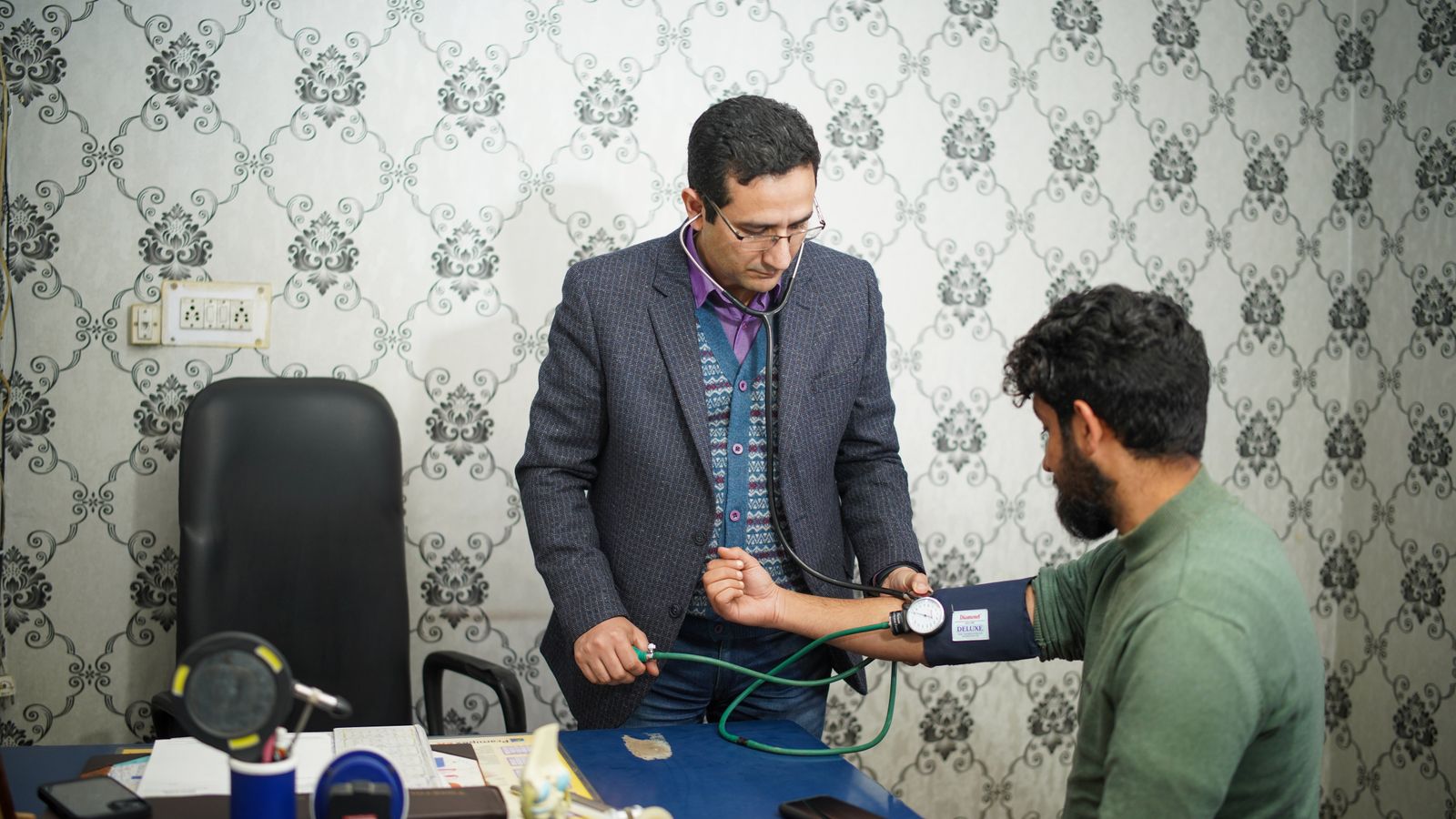
Height, weight, blood pressure, and pulse
Staff measure your height and weight, then check vital signs such as blood pressure and pulse. Your chosen service applies its own body-composition rules. Missing that standard can stop or defer your enlistment even if every other medical station is normal.
Vision screening
You complete visual-acuity and related eye screening. Bring your glasses. If you wear contacts, you may need to remove them, which is why the case and solution belong in your bag.
Hearing examination
You normally sit in a controlled booth wearing headphones and respond to tones. Follow the instructions instead of anticipating the sound. Earrings or other piercings that interfere with the equipment need to be removed.
Urinalysis and blood draw
You provide a urine specimen for required screening, including drug testing. Female applicants receive pregnancy testing. Alcohol testing is also part of accession processing.
A technician draws blood. Accession processing includes HIV testing, although the exact current panel can depend on policy and circumstances. Tell the technician if you become faint during blood draws. Do not create a dehydration problem by refusing all fluids, but do not force down excessive water either.
Provider examination
A medical provider reviews your history and examines the body systems needed to determine qualification. This may include your heart and lungs, abdomen, skin, spine, feet, joints, and extremities.
Expect to spend part of the examination in underwear. Privacy procedures and room arrangements vary. Female applicants receive a gown or drape for applicable examinations, with a female attendant present.
This is a qualification exam, not treatment. The provider is deciding whether you meet accession standards or need more information. Medical qualification and service job classification remain separate decisions.
The duck walk tests movement, not fitness
The duck walk is part of the individual medical examination. You squat deeply, stay low, and take the steps the examiner requests while they assess your hips, knees, ankles, balance, and coordination.
USMEPCOM replaced group exams with individual examinations in 2022. Its announcement describes a duck walk of two to three steps. Follow the examiner’s instructions; this checks movement and symptoms rather than speed or endurance.
The individual movement examination may also include:
- Squats and changes in position.
- Arm and shoulder rotations.
- Balance or coordination movements.
- Joint and major muscle-group checks.
- Inspection of your feet, skin, spine, and structural movement.
Follow the demonstrated motion. Do not turn it into a performance. If something hurts, say so. Hiding pain during the movement can conflict with later records or cause an injury.
If you cannot complete a maneuver, the result may be another examination or a request for records rather than an instant permanent denial.

Late morning: qualified, deferred, or sent for waiver review
After the stations, a provider reviews the results. You can receive one of three practical outcomes:
- Qualified: You continue to your service liaison and job classification.
- Deferred or temporarily stopped: MEPS needs records, treatment completion, a corrected condition, or an outside consultation.
- Does not meet the medical standard: Your branch may consider a medical waiver.
MEPS determines whether you meet the DoD accession medical standard. MEPS does not approve your service waiver. The waiver authority for your chosen branch decides based on your records and the service’s needs.
A waiver decision depends on the condition, your current function, the supporting records, and your service’s waiver authority. The Defense Health Agency’s accession standards page explains the separate qualification and waiver decisions, including conditions that cannot receive a waiver.
A completed accession physical has been reported as valid for 24 months, although your health can still be reviewed again and a ship-day check may apply. Report new injuries, prescriptions, diagnoses, arrests, or other qualification changes while waiting to leave.
A medical problem can also narrow your job list without disqualifying you from all service. A condition might permit enlistment but block a specialty with stricter vision, hearing, physical, or deployment requirements.
Early afternoon: job counseling turns promises into paperwork
Once you satisfy the required aptitude, medical, education, and background qualifications, you meet a service-specific liaison, classifier, or guidance counselor. Medical staff do not choose your job.
The counselor builds your available list from:
- ASVAB and service line scores.
- Medical qualifications.
- Citizenship, security, and background eligibility.
- Education and required credentials.
- Vacancies open at that time.
- Your preferences and service program rules.
You might qualify academically for a job and still be unable to reserve it because no training seat is open. Compare the actual duties and written guarantees of any alternative the counselor offers before accepting it.
The counselor discusses available occupations, enlistment length, training date, ship date, and any incentives. Ask these questions directly:
- What exact job or program is being offered?
- What is the active-duty or reserve obligation?
- Is the training seat guaranteed in writing?
- What happens if you fail the required school?
- Which bonus, entry grade, assignment, or education incentive appears in the contract annex?
- When do you ship?
You may ask about waiting or returning if your preferred option is unavailable, but consequences and availability rules differ by service. The counselor does not have to hold a job for you. Branches also do not guarantee one specific occupation in the same way. A guaranteed occupational field can include several jobs; have the counselor identify exactly what the contract reserves.
Read DD Form 4 before you sign it
Your core agreement is DD Form 4, Enlistment/Reenlistment Document—Armed Forces of the United States, along with applicable annexes. The counselor may also arrange fingerprinting, background review, and a Pre-Enlistment Interview before the contract is finalized.
Read every page. Verify your name, component, pay grade, enlistment period, job or program, ship date, and incentive language. A recruiter’s statement is not a substitute for contract language. If a bonus, job, entry grade, assignment, or education incentive matters to your decision, it needs to appear in the enforceable agreement or annex.
Do not sign because the room is busy or someone says the paperwork can be fixed later. Ask for the discrepancy to be corrected first. This is where an exciting verbal promise either becomes written protection or disappears.
New information can still stop processing. An undisclosed arrest, conflicting identity information, or changed medical condition may require review even after you passed the physical.
Late afternoon: the Oath of Enlistment
After final processing, a commissioned officer administers the Oath of Enlistment. You stand at attention, raise your right hand, and repeat the oath. Its commitments include supporting and defending the Constitution, bearing true faith and allegiance, and obeying lawful military authority under regulations and the Uniform Code of Military Justice.
Family members may be able to watch and take photographs, but local access and security rules control. Guests generally cannot follow you through medical or processing spaces. Confirm the ceremony policy before anyone drives several hours expecting entry.
Taking the oath does not necessarily mean you leave for basic training that afternoon.
After the oath: DEP or immediate transportation
Most applicants with a later ship date return home in the Delayed Entry Program. You remain in contact with your recruiter, attend required meetings, prepare physically, and avoid conduct that could change your eligibility.
Before shipping, disclose new medical treatment, medication, injury, legal trouble, marriage, dependency change, or other information your recruiter requests. Some applicants receive a shortened medical inspection on ship day to confirm that nothing qualification-changing has happened.
If your scheduled ship date is immediate, staff provide travel instructions and transportation to the appropriate recruit-training reception site. Do not assume you can leave MEPS to retrieve forgotten luggage or say goodbye after processing begins.
Before going to the hotel, put your Social Security card, birth certificate, photo ID, requested medical records, glasses, and contact supplies in one small bag. Then read your recruiter’s transportation instructions one more time.
Questions people actually ask
How long does MEPS take in one day?
MEPS processing commonly takes 1–2 days when travel, testing, lodging, medical screening, job classification, and enlistment are included. The main processing day can last from before dawn into late afternoon. Applicant volume, medical records, prior ASVAB testing, staffing, and job availability affect the schedule. Do not make evening plans that depend on a specific release time.
Do you have to do the duck walk at MEPS?
The duck walk is a documented part of the orthopedic and neurological movement checks used at MEPS. You squat low and move forward while staff observe your hips, knees, ankles, balance, and coordination. USMEPCOM’s revised individual exam describes two to three steps. Follow the examiner’s instructions; pain, instability, or inability to complete the motion may lead to further evaluation.
What documents should I bring to MEPS?
Bring your Social Security card, birth certificate, driver’s license or state ID, and every medical record specifically requested by your recruiter or MEPS. Bring eyeglasses even if the prescription is old. Contact users should pack a lens case and solution. Keep everything in one small bag, and verify your recruiter’s document list before leaving home.
Can I refuse a job offered at MEPS?
You can ask about waiting or returning if an acceptable job is unavailable, but options and consequences differ by service and recruiting program. Availability can change, and a counselor does not have to hold an opening. Do not sign DD Form 4 until the job, program, enlistment period, ship date, and promised incentives match what you are willing to accept.
Does a MEPS medical disqualification end enlistment?
Not always. MEPS determines whether you meet the DoD medical standard, but your chosen service decides medical waivers. You may need additional records, treatment completion, or a specialist consultation before that decision. Outcomes depend on the condition, documentation, branch, occupation, and applicable waiver policy.
Do you leave for basic training right after MEPS?
Only if MEPS processing occurs on your scheduled ship date. Otherwise, you normally return home in the Delayed Entry Program and stay in contact with your recruiter until departure. You must report new injuries, prescriptions, diagnoses, or legal problems while waiting. A shortened medical inspection may occur when you return to ship.